

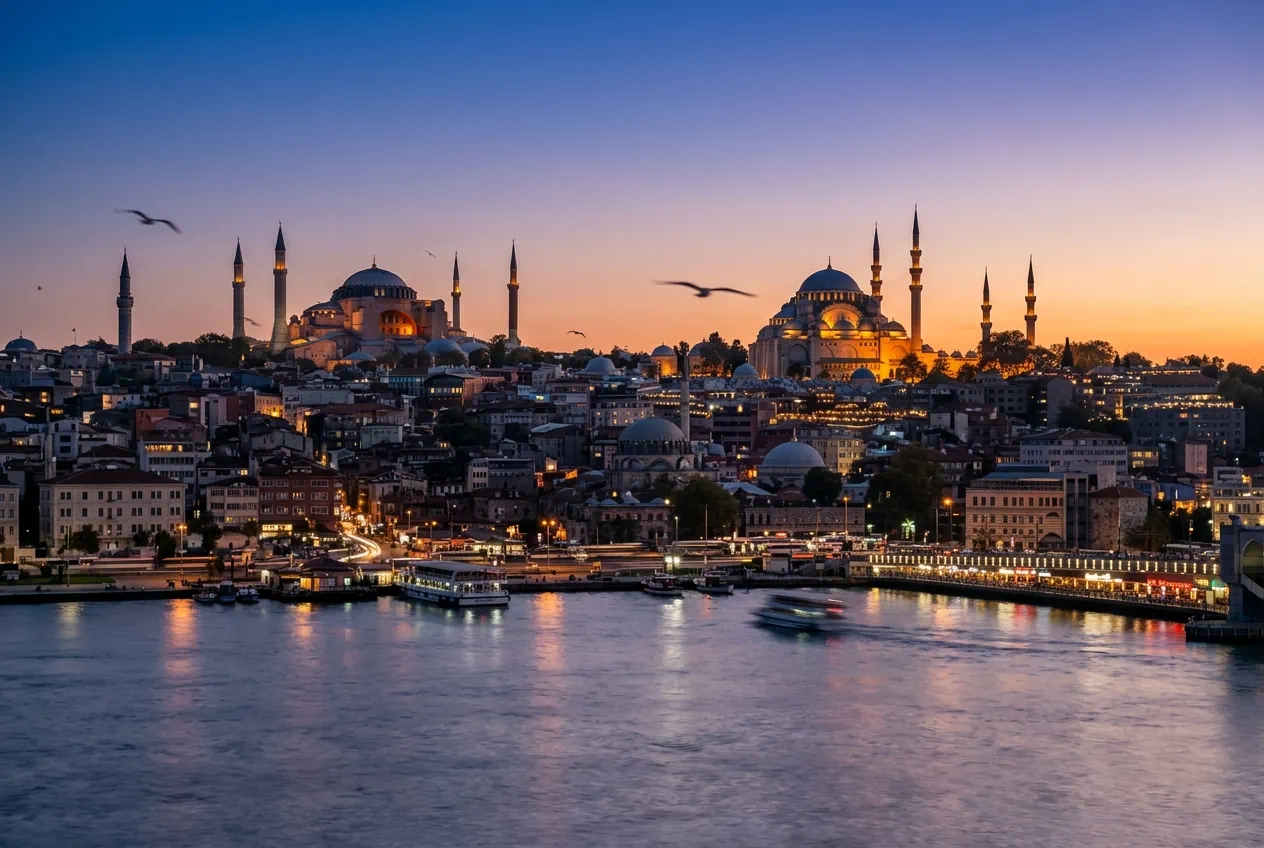
Three days is the right amount of time for Istanbul, and it is worth understanding why before you plan anything.
Two days forces you to choose between the historic peninsula and everything else, and you leave feeling you saw a museum rather than a city. Four days is generous enough that the extra day usually gets spent shopping. Three days covers the Ottoman and Byzantine core, the water, and one neighbourhood that is not on the coach circuit — which is the minimum for the city to make sense.
This itinerary is built around two constraints most published plans ignore: entry queues and prayer times.
Day 1 — The historic peninsula
Everything on day one sits within 600 metres of everything else. Do not use a vehicle between stops; the walks are two to five minutes.
08:30 — Topkapı Palace. Be at the gate before opening. Topkapı receives around 8,000 visitors on a summer day and the Harem, which is the reason to come, is capacity-controlled. By 10:30 the second courtyard is a crowd; by 08:45 it is empty enough to hear yourself think. Allow two hours, including the Imperial Treasury and the Baghdad Kiosk.
10:45 — Hagia Sophia. Five minutes’ walk downhill. Built in 537 under Justinian and converted to a mosque in 1453, it held the record as the world’s largest cathedral for nearly a thousand years. Allow 45 minutes; the upper gallery, if it is open, adds another 20.
11:45 — Basilica Cistern. Two minutes from Hagia Sophia’s exit. An underground reservoir built in 532, held up by 336 marble columns. Twenty-five minutes is enough. It is also the coolest place in the neighbourhood at midday, which is why it belongs here rather than later.
12:30 — Lunch in Sultanahmet. An hour.
13:45 — Hippodrome, Blue Mosque, Grand Bazaar. The Hippodrome is a five-minute stop on the way. The Blue Mosque takes 30 minutes but closes to visitors for roughly 30 minutes around each of the five daily prayers — check the board at the entrance, or let a guide time it. The Grand Bazaar is 10 minutes’ walk and needs 90 minutes, or 30 if you know what you want.
17:00 — Finish. The bazaar closes around 19:00 and is at its most atmospheric in the last hour, if you would rather reorder the afternoon.
What to skip on day 1: the Basilica Cistern’s queue if you arrive after 14:00 (buy a skip-the-line ticket), and the carpet shops inside the bazaar, which are not shops so much as sales rooms with a 45-minute minimum.
Day 2 — Palaces, water and the strait
Day two moves north and uses the water.
09:00 — Dolmabahçe Palace. The 19th-century Ottoman answer to Versailles: 285 rooms, a 4.5-tonne chandelier, and the room where Atatürk died in 1938, with every clock in the palace stopped at 09:05. Allow 90 minutes. Closed on Mondays.
11:00 — Bosphorus. Either a public ferry from Beşiktaş (cheap, 30 minutes, no commentary) or a private boat from Kabataş. The private option exists because the public ferry skips the close passes: Ortaköy Mosque, the two bridges, Rumeli Fortress, the wooden yalıs along the Asian shore. Two hours is the right length.
13:30 — Lunch in Ortaköy or Beşiktaş.
15:00 — Ortaköy and the Bosphorus Bridge. The mosque on the water is the most photographed building in the city after Hagia Sophia. Twenty minutes, then walk the waterfront.
16:30 — Either the Spice Bazaar in Eminönü, or the Istanbul Modern in Karaköy. The Spice Bazaar is smaller, older and far less exhausting than the Grand Bazaar, and it closes at 18:00. The Modern has the best view of the historic peninsula from across the Golden Horn.
19:30 — Dinner. Karaköy for the widest choice; Beyoğlu for the atmosphere; Sultanahmet only if you are staying there.
Day 3 — Choose a direction
Day three is where most itineraries fail, because they try to add more monuments. Istanbul’s third day should go somewhere different in kind.
Option A — The Asian side. Beylerbeyi Palace, Çamlıca Hill for the panorama, Kuzguncuk’s wooden houses, Üsküdar’s mosques, and the Kadıköy market streets. Roughly a third of Istanbul lives on this side and almost no visitor sees it. The food is better, the prices are lower, and there are no carpet shops.
Option B — The Golden Horn. Süleymaniye Mosque, the Chora Mosque’s mosaics, Tekfur Palace, St Stephen’s cast-iron church, and the Fener and Balat districts. This is the Byzantine and Jewish city rather than the Ottoman one, and it is quiet in a way that Sultanahmet has not been since the 1990s.
Option C — A day trip. Gallipoli (14 hours), Troy (14 hours) or Ephesus by flight (14 hours). All are long and all are worth it, but they consume the whole day — do not combine one with anything else.
Where to stay
Sultanahmet if this is your first visit and you want to walk to the monuments. It is quiet at night, which some travellers find dead.
Karaköy and Galata if you want restaurants, bars and the tram at your door. Ten minutes from the Old City by tram.
Beyoğlu and Taksim for nightlife. Noisier, further from the sights, better value.
Beşiktaş for a local feel with good transport. Rarely recommended to tourists, which is part of the appeal.
Avoid hotels on the airport side of the city. The 40-minute transfer each way costs you 80 minutes of a three-day trip.
What to skip entirely
The “Turkish night” shows in Sultanahmet — they are not the rituals they advertise. Guided tours of the Grand Bazaar that end in a showroom. The hop-on-hop-off bus — Istanbul’s traffic makes it the slowest way to move. And Topkapı’s second courtyard shops, which are the most expensive place in the city to buy anything.
Frequently asked questions
Is 3 days enough for Istanbul? It covers the essential monuments, the Bosphorus and one non-tourist district. It is not enough to add a day trip comfortably — that needs a fourth day.
Should I buy museum tickets in advance? Yes for Topkapı, Hagia Sophia and the Basilica Cistern between April and October. Queues at Topkapı reach 45 minutes by 10:00 in summer.
Is it worth hiring a private guide? For day one, yes — the peninsula’s value is in the sequence and the queue timing, not the walking. A guide with pre-purchased tickets saves roughly 90 minutes across the three main sites.
Can I do Istanbul without a car? Easily. The tram, the ferries and walking cover everything above. A vehicle is only needed for airport transfers and day trips outside the city.